

How To Clean The Screens In Ivs Lcd Smart Tvs
Ultra HD 4K continues to exist adopted every bit the standard resolution in the Telly earth and High dynamic range (HDR) is no longer the side by side big thing – information technology's here and bachelor in many formats.
The same can be said of smartphone screens, which continue to reach dazzling levels of sharpness thanks to increased resolutions and better pixel-per-inch densities.
But for all the new features coming our style, it's worth taking a infinitesimal to consider an quondam battle going on between two display types. Two display types that can be constitute across monitors, TVs, mobile phones, cameras and pretty much whatsoever other device that has a screen.
In one corner is LED (light-emitting diode). It's the well-nigh mutual type of display on the marketplace, nonetheless, it might be unfamiliar because at that place's slight labelling confusion with LCD (liquid crystal display).
For brandish purposes the two are the aforementioned, and if y'all encounter a TV or smartphone that states it has an 'LED' screen, it'southward really an LCD. The LED function just refers to the lighting source, non the display itself.
In the other corner is OLED (organic light-emitting diode), used in high-cease flagship phones such as the iPhone 12 Pro Max, Samsung Galaxy S21 and Google Pixel 5, as well every bit featuring in TVs from LG, Hisense, Panasonic and Sony.
Is OLED really that much meliorate than a good LCD display? We reveal how the two brandish technologies differ, what they're good for, and how they work.
OLED vs LED LCD – How exercise they differ?
In a nutshell, LED LCD screens use a backlight to illuminate their pixels, while OLED's pixels actually produce their own light. Yous might hear OLED's pixels called 'emissive', while LCD tech is 'transmissive'.
The lite of an OLED display can exist controlled on a pixel-past-pixel basis. This sort of dexterity just isn't possible with an LED LCD – merely at that place are drawbacks, too, which we'll come to beneath.
In cheaper TVs and LCD-screen phones, LED LCD displays tend to apply 'edge lighting', where LEDs actually sit to the side of the display, non right backside it. The lite from these LEDs is and so fired through a matrix that feeds it through the red, green and blue pixels and into our eyes.
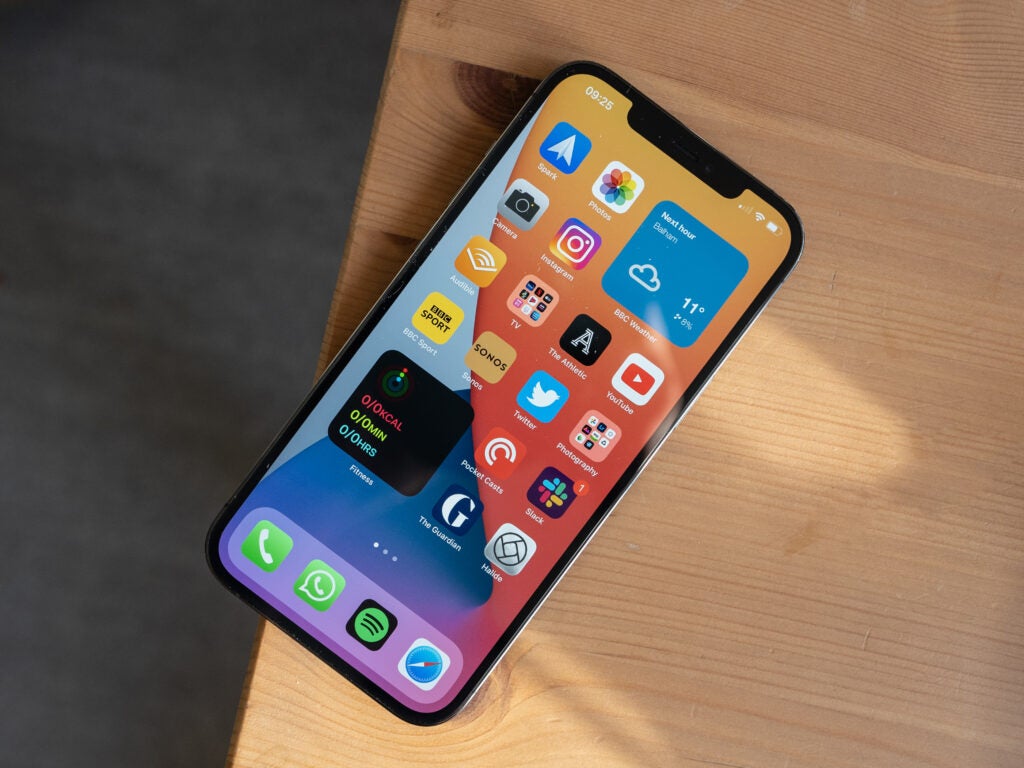
OLED vs LED LCD – Brightness
LED LCD screens are brighter than OLED. That's a big bargain in the TV earth, merely even more than so for smartphones, which are often used outdoors, in bright sunlight.
Brightness is more often than not measured in 'nits' – roughly the light of a candle per square metre. The OLED-equipped iPhone X has a typical peak brightness of 625 nits, while the LCD-toting LG G7 claims a meridian of 1000 nits. In the TV earth it goes further – Samsung's QLED TVs tin go over 2000 nits.
Brightness is of import when viewing content in ambient light or sunlight, but also for high dynamic range video. This applies more to TVs, but phones are increasingly boasting of video operation, and so it matters in that market also. The higher the level of brightness, the greater the visual bear upon, which is half the point of HDR.
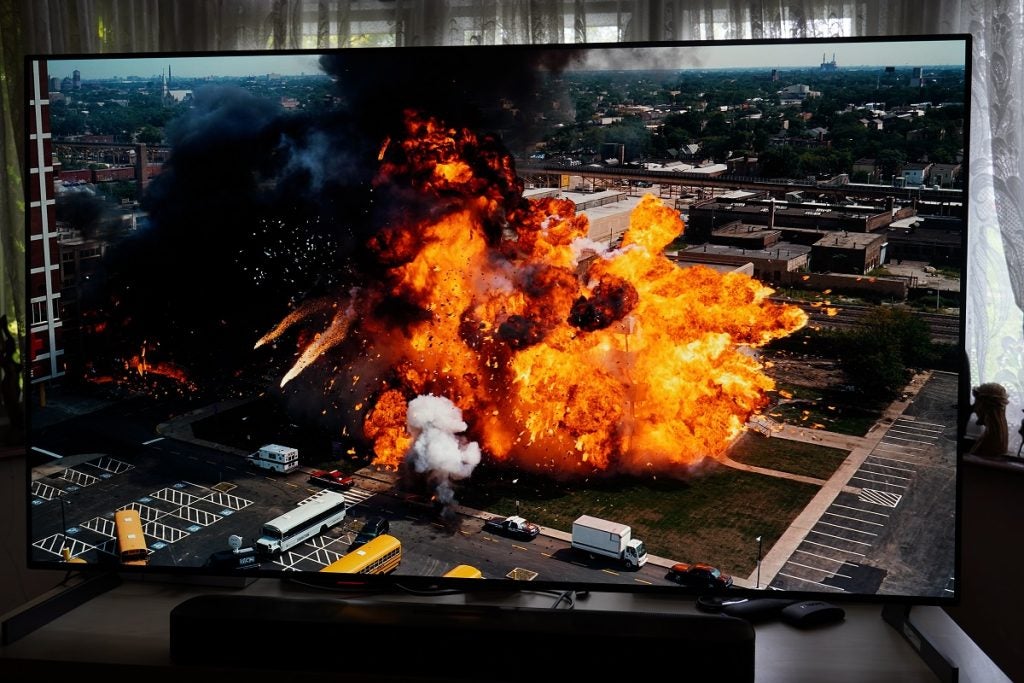
OLED vs LED LCD – Dissimilarity
Take an LCD screen into a darkened room and you may notice that parts of a purely black image aren't actually black, because you tin can still see the backlighting (or border lighting) showing through.
Being able to see unwanted backlighting affects a Goggle box'southward contrast, which is the deviation between its brightest highlights and its darkest shadows. You lot'll often see a contrast ratio quoted in a product's specification, peculiarly when it comes to TVs and monitors. This tells you how much brighter a display'due south whites are compared to its blacks. A decent LCD screen might have a contrast ratio of 1,000:1, which means the whites are a thousand times brighter than the blacks.
Dissimilarity on an OLED brandish is far college. When an OLED screen goes black, its pixels produce no calorie-free any. You can't become darker than that. That means you become an infinite dissimilarity ratio, although how nifty it looks volition depend on how bright the LEDs can become when they're lit up.

Sony'south demo of LCD vs OLED dissimilarity
OLED vs LED LCD – Viewing Angles
OLED panels enjoy splendid viewing angles, primarily because the engineering science is so sparse and the pixels are so close to the surface. That means you tin can walk around an OLED TV, or spread out in different spots in your living room, and you won't lose out on dissimilarity. For phones, viewing angles are extra important considering you don't tend to hold your hand perfectly parallel to your face.
Viewing angles are generally worse in LCDs, but this does vary hugely depending on the brandish engineering science used. And there are lots of unlike kinds of LCD console.
Perhaps the most basic is twisted nematic (TN). This is the blazon used in budget computer monitors, cheaper laptops and some very depression-cost phones. It offers poor angled viewing. If you lot've ever noticed that your estimator screen looks all shadowy from a certain angle, and then it's more than likely a twisted nematic console.
Thankfully, a lot of LCD devices use IPS panels these days. This stands for 'in-plane switching' and information technology generally provides much better colour performance and dramatically improved viewing angles.
IPS is used in the vast bulk of smartphones and tablets, plenty of computer monitors and lots of TVs. Information technology's important to annotation that IPS and LED LCD aren't mutually exclusive; it's but some other bit of jargon to tack on. Beware of the marketing blurb and head straight to the spec sheet.
OLED vs LED LCD – Colour
The latest LCD screens tin can produce fantastic natural-looking colours. However, as is the instance with viewing angles, information technology depends on the specific engineering used.
IPS and VA (vertical alignment) screens offer great color accuracy when properly calibrated, whilst TN screens tin can oftentimes look weak or washed-out.
OLED's colours have no issues with pop and vibrancy, but early on OLED TVs and phones had an problems reining in colours and keeping them realistic. These days, the state of affairs is meliorate – the Panasonic HZ2000 series OLED Television is even suitable for use in Hollywood colour-grading studios.
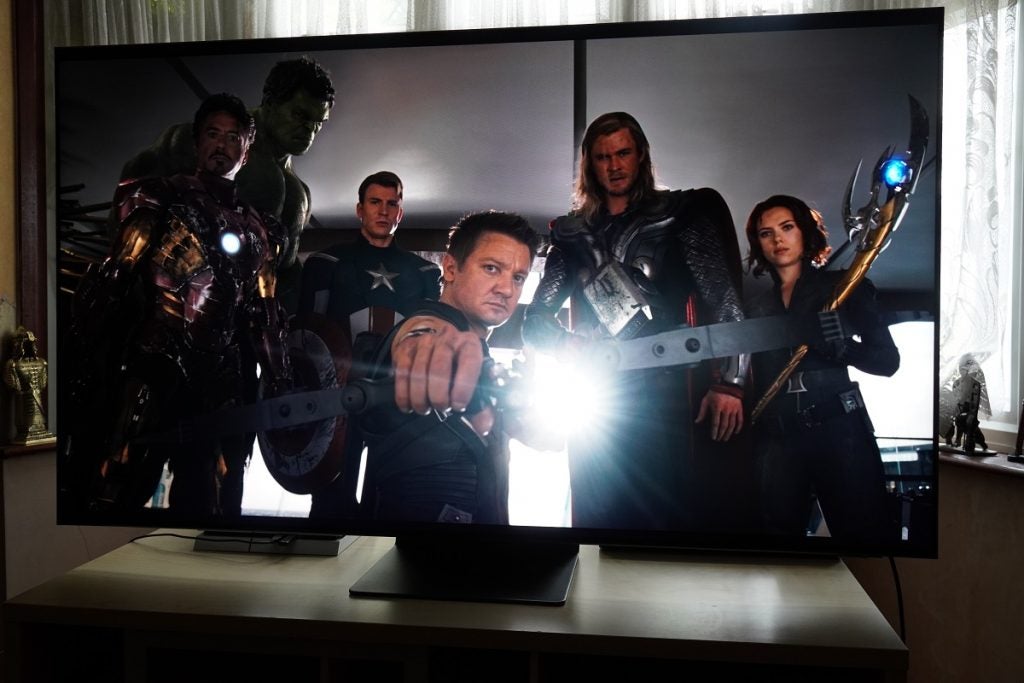
Where OLED struggles is in colour volume. That is, actually vivid scenes may challenge an OLED panel's ability to maintain levels of colour saturation. It'due south a weakness that LCD-favouring manufacturers enjoy pointing out.
What is the future for LCD and OLED?
Display makers are doing their best to tweak and meliorate the diverse limitations of LCD. While OLED'southward job over the adjacent few years is to become cheaper and brighter, we're seeing more distinct developments in LCD.
Possibly the nigh tricky is the 'quantum dot'. It's a new way to approach the LCD'southward backlight. Rather than using white LEDs, a breakthrough-dot screen uses blue LEDs and 'nanocrystals' of various sizes to convert the lite into unlike colours by altering its wavelength.
Samsung latest development actually puts LCD (nicknamed QLED) a lot closer to OLED performance. Samsung has wrapped nanocrystals in a metallic alloy and rejigged the lighting system, which fixes much of the contrast and viewing angle issues associated with LCD panels.

Which is better – OLED or LED LCD?
It's a shut call, but LCD is meliorate than OLED in terms of sheer numbers. LED LCD has been effectually for much longer and it's cheaper to make, which gives it a caput start when it comes to market saturation. However, OLED is an excellent luxury choice, and OLED technology is gaining momentum and becoming cheaper. OLED is already much better than LED LCD at handling darkness and lighting precision.
If you're dealing with a express upkeep, whether y'all're buying a phone, a monitor, a laptop or a TV, yous'll about certainly stop up with an LCD-based screen. OLED, meanwhile, is a more luxury proposition but is getting cheaper, actualization in handheld gaming devices and smartphones.
But LCD'due south say-so is slowly being chipped away; OLED tech is developing rapidly. The tech already features in the very best smartphones, and it's making large waves in the TV earth too.
Which is better? Even if you eliminate money from the equation, information technology really comes downwards to personal taste. Neither OLED or LCD LED is perfect. Some extol OLED'southward skill in handling darkness, and its lighting precision. Others prefer LCD's ability to get brighter, and maintain colours at bright levels.
How do you lot decide? Stop reading this and go to a shop to cheque it out for yourself. While a shop floor isn't the best environment in which to evaluate ultimate picture quality, information technology will at least provide an opportunity for you to realise your priorities. Whether you choose to side with LCD or OLED, you can take condolement in the fact that both technologies take matured considerably, making this is a relatively safe fourth dimension to invest.

Source: https://www.trustedreviews.com/opinion/oled-vs-led-lcd-2924602
Posted by: southgroled88.blogspot.com
0 Response to "How To Clean The Screens In Ivs Lcd Smart Tvs"
Post a Comment