

What Percentage Of The World Has Clean Drinking Water
COVID-19 response
 Availability and admission to water, sanitation and hygiene (Wash) services is fundamental to fighting the virus and preserving the wellness and well-being of millions. COVID-19 will not be stopped without access to safe water for people living in vulnerability, UN experts said.
The impacts of COVID-19 could be considerably higher on the urban poor living in slums , who don't have admission to clean h2o. Un-Habitat is working with partners to facilitate access to running water and handwashing in informal settlements .
UNICEF is urgently appealing for funding and back up to reach more girls and boys with basic h2o, sanitation and hygiene facilities, particularly those children who are cut off from rubber h2o because they live in remote areas, or in places where water is untreated or polluted, or because they are without a home, living in a slum or on the street.
In response to the COVID-19 outbreak, the International System for Migration (IOM) is adjusting its WASH services to prevent the spread of the disease. This includes continued support to affected, at-risk, low-capacity and frail countries to secure Wash services and infection prevention control in wellness facilities.
Read more than about the work in response to COVID-nineteen by UN-Water members and partners.

H2o Action Decade, 2022-2028
40 per cent shortfall in freshwater resources past 2030 coupled with a rising earth
population has the globe careening towards a global water crisis. Recognizing the growing challenge of water scarcity the Un Full general Assembly launched the H2o Activity Decade on 22 March 2022, to mobilize action that will assist transform how we manage water.
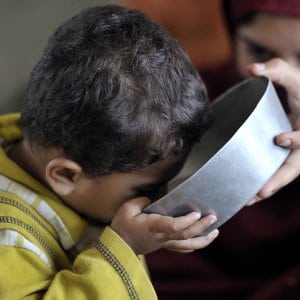
- 1 in 4 health care facilities lacks basic h2o services
- 3 in 10 people lack access to safely managed drinking water services and 6 in ten people lack access to safely managed sanitation facilities.
- At least 892 million people continue to practice open defecation.
- Women and girls are responsible for water collection in 80 per cent of households without access to water on premises.
- Between 1990 and 2022 , the proportion of the global population using an improved drinking h2o source has increased from 76 per cent to 90 per cent
- Water scarcity affects more than than 40 per cent of the global population and is projected to ascension. Over 1.vii billion people are currently living in river basins where h2o use exceeds recharge.
- 2.iv billion people lack access to basic sanitation services, such as toilets or latrines
- More than 80 per cent of wastewater resulting from human activities is discharged into rivers or bounding main without any pollution removal
- Each 24-hour interval, near one,000 children die due to preventable water and sanitation-related diarrheal diseases
- Approximately 70 per cent of all water abstracted from rivers, lakes and aquifers is used for irrigation
- Floods and other water-related disasters account for 70 per cent of all deaths related to natural disasters
6.one By 2030, achieve universal and equitable access to safe and affordable drinking water for all
six.2 By 2030, accomplish access to adequate and equitable sanitation and hygiene for all and end open defecation, paying special attending to the needs of women and girls and those in vulnerable situations
6.iii Past 2030, better h2o quality by reducing pollution, eliminating dumping and minimizing release of hazardous chemicals and materials, halving the proportion of untreated wastewater and essentially increasing recycling and rubber reuse globally
6.4 Past 2030, substantially increase h2o-use efficiency across all sectors and ensure sustainable withdrawals and supply of freshwater to address water scarcity and substantially reduce the number of people suffering from water scarcity
six.5 By 2030, implement integrated water resources direction at all levels, including through transboundary cooperation as appropriate
6.6 By 2022, protect and restore h2o-related ecosystems, including mountains, forests, wetlands, rivers, aquifers and lakes
6.A By 2030, expand international cooperation and chapters-building back up to developing countries in h2o- and sanitation-related activities and programmes, including water harvesting, desalination, water efficiency, wastewater treatment, recycling and reuse technologies
half dozen.B Support and strengthen the participation of local communities in improving water and sanitation management
Related news

Eight things you need to know near the sanitation crisis
A toilet is not just a toilet. Information technology's a life-saver, nobility-protector and opportunity-maker. Whoever you are, wherever yous are, sanitation is your human correct. And yet, billions of people are being left behind. Inquire yourself: [...]

Related videos
COP23: Mariet Verhoef-Cohen on how water connects
In pocket-sized villages in Papua New Guinea, the United nations Sustainable Development Goals can make a big difference
Share this story, choose your platform!

Source: https://www.un.org/sustainabledevelopment/water-and-sanitation/
Posted by: southgroled88.blogspot.com
0 Response to "What Percentage Of The World Has Clean Drinking Water"
Post a Comment